
ـ الإمامُ الجوادُ (عَلَيهِ الّسَلامُ): مَنِ استَحسَنَ قَبيحاً كانَ شَريكاً فيهِ.
Imam al-Jawad (AS) said, ‘He who approves of a wicked deed partakes in it.’[Kashf al-Ghamma, v. 3, p. 139]

An amazing Quran recitation video clip , recited by Shaikh Minshawi. DO NOT MISS THIS. 🌹🌹🌹🌹🌹🌹🌹🌹🌹
An amazing Quran recitation video clip , recited by Shaikh Minshawi. DO NOT MISS THIS. 🌹🌹🌹🌹🌹🌹🌹🌹
Daily Hadith
ـ الإمامُ عليٌّ (عَلَيهِ الّسَلامُ): أهلَكَ الناسَ اثنانِ: خَوفُ الفَقرِ، وطَلَبُ الفَخرِ.
Imam Ali (AS) said, ‘There are two things that have ruined people: fear of poverty and going after pride.’[al-Khisal, p. 69, no. 102]

Salawat Of Hazrat Fatima ( Peace be upon her ) . Recited by : Sayed Abazar (Mahdi ) Wahedi
SALAWAT OF FATIMA ZAHRA ( peace be upon her ) RECITED BY SAYED ABAZAR ( MAHDI ) WAHEDI .
I ENCOURAGE ALL MY BROTHERS AND SISTERS INCLOUDIN MY SELF TO REASERCH ABOUT THE LIFE STYLE OF FATIMA ZAHRA ( peace be upon her ) . SHE IS ACTUALLY THE BEST ROLE MODEL FOR ALL HUMAN BEING SPECIALLY FOR THE SISTERS .
MAY ALLAH GRANT US THE TAWFIQ AND SUCCESS TO HAVE HER IN EVERY SINGLE MOMENT OF OUR LIVES AS OUR ROLE MODEL . ( SAYED ABAZAR WAHEDY ) .
House of Ethic
Topic 7: *Inner regret, the basic requirement for repentance (Part 1)*
The first and the basic requirement for repentance is inner regret upon one’s sins and heedlessness.
Imam Baqir (a) says:
*«كَفَى بِالنَّدَمِ تَوْبَةً»*
_“The very feeling of remorse is enough for repentance.”_
The person seeking repentance should safeguard this feeling for it would prove helpful in the future, as the tradition goes on:
_“By lord! No one achieves salvation from sins unless he confesses to them.”_
Of course, confessing to one’s own mistakes in public is not right. Only confession to God is desirable. This is because a believer’s esteem is very dearer to Allah than that his sins be known to others and he be humiliated before them, that too, before individuals who themselves are sinful and in need of Allah’s forgiveness for their own sins. Rather, a believer must confess his sins only before His Lord, so that with the humility and remorse that he expresses, the rivers of Allah’s mercy flow for him. Imam Sadiq (a) says:
*«إِنَّ اللَّهَ يُحِبُّ الْعَبْدَ أَنْ يَطْلُبَ إِلَيْهِ فِي الْجُرْمِ الْعَظِيمِ وَ يُبْغِضُ الْعَبْدَ أَنْ يَسْتَخِفَّ بِالْجُرْمِ الْيَسِير»*
_“Indeed Allah loves a servant who is attentive of Him after committing a great sin (asks for His forgiveness) and does not like a servant who underestimates a minor offence he has committed and neglects it (and does not think about repentance)._
*Ayatullah Tahriri*, Commentary on Munājāt al-Ta’ibīn , pg 76
Topic 7: *Inner regret, the basic requirement for repentance (Part 2)*
When a servant feels embarrassed due to a sin that he has committed and expresses regret over it, he will certainly try to compensate for it. Imam Ali (a) says:
*«إِنَّ النَّدَمَ عَلَى الشَّرِّ يَدْعُو إِلَى تَرْكِه»*
_“Embarrassment over evil pulls one towards abandoning it.”_
*Tawbah (repentance) does not require loud expressions or a special place and time*, rather, according to Imam Sadiq:
*«مَا مِنْ عَبْدٍ أَذْنَبَ ذَنْباً فَنَدِمَ عَلَيْهِ إِلَّا غَفَرَ اللَّهُ لَهُ قَبْلَ أَنْ يَسْتَغْفِرَ»*
_“There is no servant that commits a sin and feels ashamed of his act but that Allah forgives him even before he seeks repentance.”_
Of course, it is quite obvious that noble places and occasions such as the birth days of the Imams and *the day and night of al-Qadr*, the pilgrimage to Mecca, visiting the shrine of the Prophet (s) and Imams (a) provide very good conditions for regret and repentance. These opportunities should be utilized in the best possible manner and religious instructions also encourage us towards benefiting from these opportunities. However, for all of these instances, an internal transformation is required so that a person’s repentance becomes a true repentance which is worthy of acceptance by Allah. Imam Sadiq (a) says:
*«مَنْ أَذْنَبَ ذَنْباً فَعَلِمَ أَنَّ اللَّهَ مُطَّلِعٌ عَلَيْهِ إِنْ شَاءَ عَذَّبَهُ وَ إِنْ شَاءَ غَفَرَ لَهُ غَفَرَ لَهُ وَ إِنْ لَمْ يَسْتَغْفِر»*
_“One who commits a sin, and is aware of Allah being watchful over him, and that He may punish him if He likes, or He may forgive him if He likes, he would be forgiven even if he does not seek forgiveness.”_
*Ayatullah Tahriri*, Commentary on Munājāt al-Ta’ibīn , pg 78
Topic 8 – *The effect and importance of seeking repentance*
Every stage of repentance (tawbah) has a specific life giving effect on the soul of the human being, and seeking forgiveness [through uttering the words] is no exception. It is for this reason that the words (zikr) for seeking forgiveness are recommended to be recited at different times during the day and night, for instance after the afternoon prayer (zuhr), in the evening, in the middle of the night. The effects of this recitation have also been mentioned.
What is important to note is that lack of understanding the exact meaning of the phrases of repentance shouldn’t lead one to abandon it altogether, for recitation of these phrases are important and not devoid of effects. When one commits himself or herself to recite 70 times after the Asr prayers _astaghfirullaha rabbi wa atubu ilaih_ (I seek Allah’s forgiveness and return to him) this very commitment and practical attention to this act has effects. Imam Sadiq (s) is reported to have said:
*«إِذَا أَكْثَرَ الْعَبْدُ مِنَ الِاسْتِغْفَارِ رُفِعَتْ صَحِيفَتُهُ وَ هِيَ تَتَلَأْلا»*
_”When a servant increases his repentance, his book of action rises whilst it is luminous.”_
However, Shaytan who is the open enemy of mankind, never ceases in his endeavours, and always strives to prevent him from achieving even this station of recitation (zikr) and dua. The skill of man lies in him standing firm against the whisperings of shaytan, and not falling short of even the smallest of good actions, such that step by step he can progress in his journey towards Allah and reach Perfection, and in this path he does not consider any good action – however small – as futile.
The Holy Prophet (s) once said,
*«خَيْرُ الدُّعَاءِ الِاسْتِغْفَار»*
_”The best of supplication (dua) is seeking forgiveness.”_
Nonetheless, man should always strive to deepen his actions, and should struggle to stay safe from committing any sins. However, if one has not reached the depth of knowledge (ma’rifat) and at times slips towards sins, never should he give up the apparent (zahir) actions. It has been reported from Imam Ridha (a):
*«مَثَلُ الِاسْتِغْفَارِ مَثَلُ وَرَقٍ عَلَى شَجَرَةٍ تُحَرَّكُ فَيَتَنَاثَرُ وَ الْمُسْتَغْفِرُ مِنْ ذَنْبٍ وَ يَفْعَلُهُ كَالْمُسْتَهْزِئِ بِرَبِّه»*
_”The example of seeking forgiveness is the example of the leaves that fall from a tree; and someone who seeks forgiveness from a sin which he is performing, is like one who makes fun of his Lord.”_
*Ayatullah Tahriri*, Commentary on Munājāt al-Ta’ibīn , pg 80
Topic 9 – *The Whispering of Satan to Delay Tawbah (Seeking Forgiveness) and its Solution (Part 1)*
Through his whispers, Satan wants to prevent man from certain actions. Man’s responsibility is that, at the first level, he must disregard these whispers, and at the next level, he should try to push away these whispers from his mind. For example, when one intends to join congregation prayers, Satan says to him, “If you go for congregation prayers, people will realize that you want to offer congregation prayers and this is tantamount to riya’ (showing off) and actions carried out with riya are void.”
Whilst satan’s entire existence is filled with shirk, he sometimes appears in a virtuous form and whispers the notion of riya’ into man’s mind. And in order that man obeys him and lets go of the noble act, he whispers to him that acts carried out with riya’ are absolutely useless.
Such circumstances can be seen in the traditions as well, when the Shias would go to the Imams (who are the true spiritual teachers and doctors of the soul), seeking solutions for Satan’s whispers that they would be afflicted with. A follower of Imam Sadiq (a) told him of a whisper of Satan, which had been bothering him. The Imam said:
لَا شَيْءَ فِيهَا تَقُولُ لَا إِلَهَ إِلَّا اللَّه
_”Disregard it and say La ilaha illa Allah (there is no God but Allah)”_
It is narrated from Abu Basir that they asked Imam Muhammad Baqir (a), “What should someone who doubts a lot in his prayers and does not know which rak’ah (unit of prayer) he is reciting in prayers do?” The Imam (a) answered, _“He should start the prayer from the beginning.”_ They asked, “What if he becomes more doubtful and still has doubts even if he starts from the beginning?” The Imam replied:
_“Even though he has a doubt, he should continue his prayer. By abandoning his prayer, he would get Satan in the habit of whispering to him any time he likes, and that would encourage him more. Whoever becomes very doubtful should finish his prayers by relying on one of the possibilities (in his doubt) – he shouldn’t nullify his prayer with every doubt that visits him. If he disregards his doubt for some time, he will stop having these doubts. Satan – the wicked – wishes to be in command and to be followed; however, if he is disobeyed, he will not return.”_
*Ayatullah Tahriri*, Commentary on Munājāt al-Ta’ibīn , pg 82 – 84
Topic 9 – *The Whispering of Satan to Delay Tawbah (Seeking Forgiveness) and its Solution (Part 2)*
One should try to act on what Allah and the Ahl al-Bayt (a) have prescribed, and be persistent in that. It is natural for one to have a lapse of attention during worship—although this is not something desired and we should look for a cure for this. However, this lapse of attention is not considered riya and it should not preoccupy us. Riya is when one intends to carry out an act for the sake of showing off to others, and this is the only intention for his act.
Zurarah asked Imam Muhammad Baqir (a) of the one who does a good deed, but feels happiness in his heart when others see him. The Imam (a) replied:
_“There is no problem with that. (Naturally) there is no one who does not wish for others to know of the good he does. This is fine as long as this is not the reason he sets out to do the act.”_
However, one should always—with determination and thoroughness—be attentive towards the condition of his soul, and should not let himself wander unchecked. He should be increasingly particular of his actions so that his actions become more perfect and yield more fruits.
*Ayatullah Tahriri*, Commentary on Munājāt al-Ta’ibīn , pg 82 – 84
Topic 10: *The necessity of recognizing the paths of Satan’s whispering (Part 1)*
One of the important and subtle issues with regards to confronting Satanic whisperings is to recognize the openings from which his whispering penetrates. At times Satan attempts to penetrate into the heart and soul of man, utilizing the path of whisperings that pertain to religious beliefs. Man’s responsibility in this case is to neutralize Satan’s attack by disregarding the whisperings, and by pondering upon the fundamental aspects of the faith.
Imam Muhammad Bāqir (a) says:
A man came to the Messenger of Allah (s) and said “Oh Messenger of Allah! I have become a hypocrite.” The Holy Prophet (s) said, _”By Allah you have not become a hypocrite, and if you had become a hypocrite you would not have come before me, informing me. What is it that has caused you to doubt? I think the attentive enemy (Satan) came to you and said to you ‘Who created you?’ So you replied: ‘Allah created me’. Then he said to you ‘Who created Allah?'”_
The man said “Yes, I swear by Him who sent you with the truth, that is what happened”. The Holy Prophet (s) said _”Verily Satan comes seeking you from the path of action (and refraining you from good actions) and if he is unsuccessful then he approaches you from this path so that he may cause you to slip. And whenever this happens then he (who it happens to, it is incumbent that he) should remember the oneness of Allah (that is he should utter the remembrance lā ilāha illallāh).”_
🍁The important and subtle point in this tradition, is the manner in which the remedy has been presented by the most perfect of all mortals and the real doctor of all pains.
The noble messenger approaches the matter in the most measured manner such that the root of these whisperings are burnt out. Therefore he says:
_The fact that you come before a walī of Allah and seek from him, and the fact that you strive that this state of yours changes and is rectified, is in itself good and desirable._
This simple action even though is the first step, it is the most essential of undertakings and most blessed of efforts. It has the ability to remedy other ailments too. What is important is that the action is undertaken in accordance to the Divine command, and the incentive for acting is also the Divine command.
*Ayatullah Tahriri*, Commentary on Munājāt al-Ta’ibīn , pg 85 – 86
Topic 10: *The necessity of recognizing the paths of Satan’s whispering (Part 2)*
Under no circumstances should man be heedless of seeking forgiveness. The task of Satan is to whisper and to give a pretence of impediments; his goal is to prevent man from reaching eternal happiness. Of course he starts his work from the first step and says:
“Why do you seek forgiveness and repent to Allah? This action is beyond your capacity, because you will eventually commit a sin again. What use is this repentance?”
In response to him, it must be said:
_”My plan is that I won’t commit a sin again and with the Will of Allah I won’t. What good are you? You are neither my advocate nor my guardian.”_
The primary goal of Satan by these whisperings is to take control of the affairs of man and place him under the yoke of his authority. In response, man must seek forgiveness and ask for help from God and also seek that, in the path of achieving repentance, he takes a step. In this regard, man should have a firm resolve, and to the extent that he can, he should not refrain from righteous deeds, although seeking forgiveness and repenting themselves are considered from the righteous deeds.
*Ayatullah Tahriri*, Commentary on Munājāt al-Ta’ibīn , pg 85 – 86

Daily Hadith
ـ الإمامُ عليٌّ (عَلَيهِ الّسَلامُ): بِشرُكَ يدُلُّ على كَرَمِ نفسِكَ .
Imam Ali (AS) said, ‘Your cheerfulness shows the generosity of your soul.’[Ibid. no. 4453]

The house of Ethics
Topic 3: *Sin causes good deeds to be nullified (Part 2)*
Sins nullify the good deeds. But it is important to note that if one ends up committing a sin, he should not give in to despair and say to himself, “Now that I have committed a sin, there is no point in performing good deeds!”
*This is a whisper of Shaytan, who wants the servant of Allah to distance himself completely from Him*, and through the excuse of having slipped (sinned unintentionally), keep one away from committing good deeds.
Imam was once asked, “A person commits sins and sometimes performs good deeds as well. Is this beneficial for him?”
Imam (a) replied, _”His good deeds will eventually result in him forsaking his bad deeds.”_
As mentioned earlier, performing good deeds alongside heedlessness and committing sins is like consuming nutritious food alongside harmful foods.
This is just like a smoker, who doesn’t reduce his intake of healthy food although he is aware of the ills of smoking, for he also understands that the negative effects of the cigarette are reduced by the consumption of healthy food.
In any case, *the reality of sin is distancing oneself from the Almighty Allah*. This is a warning that sin and transgression deprives man of divine absolute perfection and the acquisition of desirable traits. This reality is hard to bear for someone seeking perfection, and for this reason, all the stages have been mentioned in the supplications taught by Ahl al-Bayt (a) so that everyone may benefit from them in accordance to his own level of belief and different states.
*Ayatullah Tahriri*, Commentary on Munajat e Taibeen, pg 54
Topic 4: *Minor Sins: The Basis for Greater Sins (Part 1)*
In this whispered prayer (munājāt), Imam Sajjad (a) informs us of the multiple effects of sins in three stages. He (a) warns us that whenever our souls incline towards satanic or animalistic desires, right away, we should pay attention to these negative effects of sins, and be aware that the result of acting upon these desires is the (spiritual) death of our hearts.
Of course, in the presence of God, committing any sin, big or small, is a grave offense, because He is the Superior Being, and the smallest sin before such greatness and magnanimity is a crime and treachery.
The Prophet (s) says:
*لَا تَنْظُرُوا إِلَى صِغَرِ الذَّنْبِ وَ لَكِنِ انْظُرُوا إِلَى مَنِ اجْتَرَأْتُم*
_”Do not look at the smallness of the sin; rather, look against whom you have had the audacity (to disobey).”_
In another tradition, he (s) says:
*إِنَّ الْمُؤْمِنَ لَيَرَى ذَنْبَهُ كَأَنَّهُ صَخْرَةٌ يَخَافُ أَنْ تَقَعَ عَلَيْهِ وَ إِنَّ الْكَافِرَ يَرَى ذَنْبَهُ كَأَنَّهُ ذُبَابٌ مَرَّ عَلَى أَنْفِه*
_”Certainly, the believer sees his sin as if it is a boulder, which he is afraid will fall on him; whereas, the disbeliever sees his sin as if it is a fly that passed by his nose.”_
The Qur’an and the traditions categorize sins into minor and greater, and the effects of each sin – in this world and the next – are described to us. However, in the aforementioned traditions, the Prophet (s) wants us to increase in our understanding of the Absolute Greatness of Allah. The more our understanding of God’s greatness and the signs of His existence increases, and we realise the immense blessings that God has endowed upon us, our audacity to disobey God lessens.
The Prophet (s) says:
*إِنَّ إِبْلِيسَ رَضِيَ مِنْكُمْ بِالْمُحَقَّرَاتِ وَ الذَّنْبُ الَّذِي لَا يُغْفَرُ قَوْلُ الرَّجُلِ لَا أُؤَاخَذُ بِهَذَا الذَّنْبِ اسْتِصْغَاراً لَهُ*
_”Certainly, Satan is satisfied with you because of small sins, since sins that are not forgiven are those about which the sinner says, I will not be reprimanded for this sin due to its smallness.”_
*Ayatullah Tahriri*, Commentary on Munajat e Taibeen, pg 65 – 67
Topic 4: *Minor Sins: The Basis for Greater Sins (Part 2)*
Imam Ridha (s) says:
*«الصَّغَائِرُ مِنَ الذُّنُوبِ طُرُقٌ إِلَى الْكَبَائِرِ وَ مَنْ لَمْ يَخَفِ اللَّهَ فِي الْقَلِيلِ لَمْ يَخَفْهُ فِي الْكَثِيرِ»*
_”Lesser sins pave the way for greater sins; thus, the one who is not afraid of God in committing lesser sins, will not be afraid of him in committing greater sins.”_
It is for this reason that we must always be cautious and by understanding the nature of our relation to Allah, we should continuously pay attention to our smallness before Him.
🍁 Of the most important acts in order to achieve this, are:
– Set some time to be with Allah in solitude.
– Be attentive towards one’s spiritual obstacles.
– Supplicate to Allah and plead with him.
– Find ways to get rid of these spiritual obstacles.
– Constantly seek help from Allah and His Awliya (close servants of Allah) on this path.
Death of the heart has different levels, which depend on one’s cognizance (ma’rifat) of Allah and the type of sin committed. If one continues to disobey Allah, it is possible for his heart to die, such that it would never be brought back to life again. This is why in munājāt al-Ta’ibīn, Imam Sajjad (a) requests Allah to grant life to his heart.
*Ayatullah Tahriri*, Commentary on Munājāt al-Ta’ibīn , pg 67 – 69
Topic 5: *The necessity of hope and belief in God’s acceptance of repentance*
God Almighty has established repentance so that man can constantly work towards reforming himself and if he stumbles (at any point) he does not become afflicted by a state of despair from self-reform, such that he would think: “It is all over! We have no way of reaching the good life (hayaat e tayyibah) any more…”
God Almighty has set out different ways for his servants to pay attention to and connect with Him. Since the real life of man, after having committed sins, begins with repentance and observance of the limits and boundaries of God, in order to achieve this real life, a correct spiritual attention towards God is required. And from among the most important standpoints is that a servant considers God accepting of himself i.e. accepting of repentance, and believes in His word, where He says:
*«وَهُوَ الَّذِي يَقْبَلُ التَّوْبَةَ عَنْ عِبَادِهِ وَيَعْفُو عَنِ السَّيِّئَاتِ»*
_“And He is the one who accepts the repentance of His servant and pardons the evils.”_ [Shoora:25]
If man does not manage to achieve this perspective and does not have this reliance on God, he will never be pulled towards God. It is because of this that the issue of needing God to turn to His servant has been stated in this supplication and in other supplications, where it says: _“Make my heart alive by Your turning to me.”_
God Almighty also states in the Holy Quran: _“Then he turned towards them so that they repent.”_ [Tawbah:118]
Of course, repenting and returning to God does not have special rituals and customs nor does it require cumbersome effort. God’s mercy and love is so embracing of His wrongful servants that reconciliation with Him does not require so much effort and pleading and begging. Rather, the simple act of acknowledging one’s mistakes, shortcomings, and neglect, accompanied by a sense of shame and embarrassment of them is in itself God’s turning to His servant. It is by instilling this awareness that God prevents the continuity of His neglect. It is for this reason that man must value this state and try to meet the conditions of repentance.
*Ayatullah Tahriri*, Commentary on Munājāt al-Ta’ibīn , pg 73 – 74
Topic 6: *Repentance from all sins; as is appropriate for that sin*
Despite the fact that many effects and blessings have been mentioned for repentance, at the same time there are conditions for repentance. The more one fulfils the conditions of repentance, the more results he will achieve and the better these results will be. It has been narrated from Imam ‘Ali (a) that a person did istighfār in his presence (sought forgiveness from Allah). The Imam said to him:
“May your mother grieve over you! Do you realize istighfār (is not just this empty utterance of the tongue) is the station of the illīyīn (a name in the Holy Qur’an for those in Paradise, see 83:18) and comprises of six meanings:_
1- regret over what has occurred
2- resolve to not return to that action ever again
3- that you fulfil the rights of others from amongst the creation, such that you meet Allah free of any responsibility
4- that you carry out all the obligatory actions that you squandered
5- that you melt away with remorse the flesh that grew on your body from harām until the skin sticks to the bone and new flesh then grows between them
6- that you make your body taste the difficulty of obedience just as you had made it taste the sweetness of sin,
then after all that say astaghfirullah (I seek forgiveness from Allah)!”
The intention of the Imam is that istighfār is a reality comprising of all its conditions. Of course, the six conditions that were mentioned pertain to the particular sin within the context of which the Imam instructed istighfār. *Clearly, istighfār for every sin does not require all these conditions.* If someone has committed a sin of the eye, can it be claimed that in order to seek repentance for this sin he must melt his flesh? Obviously this is not so. So that man does not become afflicted with excessiveness nor laxity in this area, *it is necessary to seek the counsel of, and seek a plan of action from those who are experts in this field, and aware of all the aspects of these affairs*.
*Ayatullah Tahriri*, Commentary on Munājāt al-Ta’ibīn , pg 75 – 76

The house of Ethics
Topic 1: *Yaqzah – Awakening: The first step in spiritual wayfaring*
The state of repentance is an extremely noble state and it is important that the weak and sinful servant of Allah continually be in such a state before Him.
This state is normally achieved after a form of awakening with regards to one’s actions. The scholars of ethics and spiritual training say that for self-reform and wayfaring on the path of self-struggle, it is important for one to develop a sense of awareness in the beginning, which is known as _Yaqzah_ or the awakening. In order to acquire this state, man must pay attention to his position in existence, and deliberate the nature of the relationship between Allah and himself. Of course, such states are acquired by everyone during their lives and the sense of awareness is created; however, it is important that man benefit from this awareness on the path of servitude. Allah says in a Hadith e Qudsi to Prophet Dawud,
_“Verily, there are breezes for your Lord throughout the days of your life. Beware, and lie in wait for them, and do not refrain (distance yourself) from them.”_
One of the forms of awareness is paying attention to learning the Quran from the teachings of the Imams such that one must benefit from them in the best manner, value his time, and alongside acquiring their teachings, take steps toward self-reform.
*Ayatullah Tahriri*, Commentary on Munajat e Taibeen, pg 31
Topic 2: *Committing sins and abandoning good deeds (‘amal-e-saalih) causes the death of the heart*
If a man does not have any good deeds, he will never reach the ‘good life’ _(hayaat attayyibah)_ [i.e. the good life promised by Allah in the Quran 16:97], and not reaching this _‘good life’_ is the true meaning of death.
Imam Sadiq (a) has said, _“When someone commits a sin, a black spot appears on his heart. If he is awakened and repents (which means returning to Allah and compensating for his actions and seeking forgiveness), this black spot is wiped off. However, if he continues sinning, slowly, blackness will cover the heart and he will never attain salvation.”_
★ The following two examples help explain the point better:
*1.* During the initial days of puberty, a youth sees lying as an ugly act, and if someone lies openly, he would unconsciously react against him. The reason behind this is that man’s Divine Disposition (fitrah) immediately perceives the indecency of lying. However, if one lies himself, the indecency of lying would slowly be lost from the soul.
Perceiving the indecency of lying is a reality and a light (noor) and whenever this reality and light is lost, darkness takes its place, and a heart that is engulfed by the darkness of sins, dies.
*2.* Likewise, if a man with a healthy body happens to consume something unhealthy, his body reacts immediately and tries to eliminate the cause of the harm. As long as the white blood cells (that eliminate the unnecessary materials/elements from our body) are alive, these harmful elements are removed from our body. However, if these harmful elements are high in quantity and if one continues to have such foods, the white blood cells would become weaker in reacting against them, to the extent where it is possible that these cells die, and the danger spreads towards other, previously healthy organs, such as the kidneys or lungs, causing them to fail.
*Sins have a similar effect on the heart and soul,* and can eventually prove to be a deadly poison for the heart.
*Ayatullah Tahriri*, Commentary on Munajat e Taibeen, pg 62-64
Topic 3: *Sin causes good deeds to be nullified (Part 1)*
If someone performs good deeds abundantly, but considers himself unrestricted with regards to committing sins and does not exercise self-control through constant watchfulness of the self _(muraqabah)_, his good deeds would definitely be eliminated by those sins.
It is learnt from the Quran and teachings of the Ahlul Bayt that committing sins destroys the actions that were performed to seek Allah’s proximity, such that it nullifies their effect.
This is just as though someone consumes healthy, nutritious food on one side and at the same time, intakes unhealthy and harmful food. This neutralizes the good effects of the healthy food.
Hence, the first stage of faith in light of the teachings of Ahlul Bayt is the issue of performing the obligations (Wajib) and refraining from forbidden acts (Harãm), with extraordinary emphasis and focus on avoiding the Harãm. In one narration, it is said: _”Faith is not present in one who commits a sin.”_
This means that until one does not seek forgiveness after having committed sins, faith would not enter his heart.
Similarly, Imam Baqir (a) says:
_”How great are the good deeds after sins, and how ugly are the bad deeds after good deeds.”_
The Holy Prophet (s) has also said:
_”Refraining from sins precedes the performance of good deeds.”_
*Ayatullah Tahriri*, Commentary on Munajat e Taibeen, pg 52-54
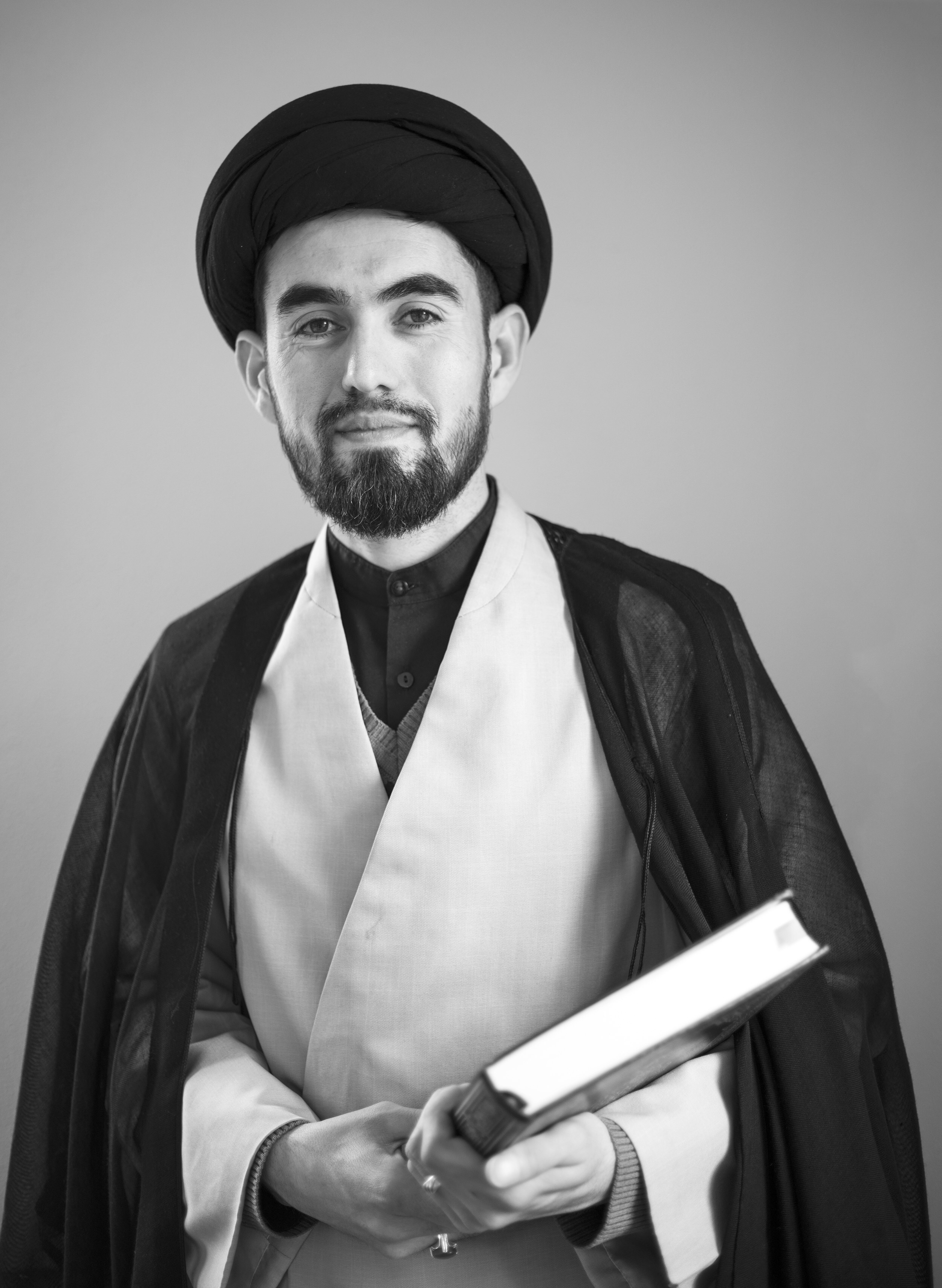
The House of Ethics
*بِسْمِ اللَّهِ الرَّحْمَٰنِ الرَّحِيمِ*
During the holy month of Ramadan, we will be regularly posting advices on ethics, spirituality, and self-reform, from the works of Ayatullah Tahriri.
May Allah help us benefit from these invaluable teachings of the Quran and Ahlulbayt, especially with the blessings of this Glorious Month, and may we be able to purify our souls by implementing them in our daily lives.
*Brief Biography of Ayatullah Tahriri*
Residing in the holy city of Qom, Ayatullah Muhammad Baqir Tahriri is one of the most senior contemporary scholars of ethics, Islamic spirituality, and tafsir. He acquired his seminary studies under the most senior Shia scholars, such as Ayatullah Lankarani, Ayatullah Tabrizi, Ayatullah Misbah Yazdi and Ayatullah Jawadi Amoli, and at the same time, received spiritual guidance by his own father, Ayatullah Mahmood Tahriri, Ayatullah Mujtahidi, the giants Allamah Tabatabei and Ayatullah Bahjat, and spent years under the special guidance of Ayatullah Sa’adat Parwar (who himself was one of the most outstanding students of Allamah Tabatabai ) .
Currently, he is the Imam e Jama’at at Madrassah Imam .  where students from all over Iran, as well as foreigners come to benefit from his ethical advices and spiritual instructions.
Daily Hadith
ـ الإمامُ الصّادقُ (عَلَيهِ الّسَلامُ): الغَضَبُ مِفتاحُ كُلِّ شَرٍّ .
Imam al-Sadiq (AS) said, ‘Anger is the key to all evils.’[Bihar al-Anwar, v. 73, p. 263, no. 4]
 Sayed Abazar Wahedi