
Salam alaikom. This is my Recitation in the Eid Of Ghadeer.
With Duas.
May Allah accept it.
Sayed Abazar Wahedi ( Mahdi ).
Here is the link too. https://youtu.be/TElGfaO-kvQ
Salam alaikom. This is my Recitation in the Eid Of Ghadeer.
With Duas.
May Allah accept it.
Sayed Abazar Wahedi ( Mahdi ).
Here is the link too. https://youtu.be/TElGfaO-kvQ


A beautiful story: Not Even For a Mountain of Gold
When the early Muslims were subjected to ill-treatment and persecution, 83 of them migrated to Ethiopia l, led by Ja’afar bin Abu Talib. The infidels of Mecca learnt that the Muslims were having a comfortable refuge in Ethiopia. They sent a delegation comprising of Amr bin Al-Aas and Abdullah bin Rabia to Negus. The king of Ethiopia, loaded with invaluable gifts for the king and his
ministers. And with a mission to seek repatriation of the Muslims. After having presented the gifts, they approached the king. At his court, Negus was told by Amr bin Al-Aas that the Muslims believed in a prophet who spoke derogatory about Jesus. Turning to Ja’afar bin Abu Talib, Negus enquired:
“What do you say about Jesus?”
Ja’afar recited the verse from Surah An-Nisa, Verse 171 :
“The Messiah, Jesus Son of Mary, was Allah’s apostle and His word. Which He cast to Mary, and spirit from Him.”
Negus picked a piece of wood from the ground and said:
“By God, Jesus was not a bit higher than what you have said, not higher than even he measure of this piece.” And then he returned to Amr bin Al-Aas and said:
I am not going to harm them, even if I were given a mountain of Gold. Take away all the gifts you have brought, for God did not receive any bribe from me when He blessed me with this kingdom, nor did He pay any heed to what others said about me when He decided to raise me to this status.”
Sayed Abazar Wahedi ( Mahdi )
💠 Twenty five keys and secrets for success from the guidance of Imam Ja’far al-Sadiq (peace be with them)
1) طلبتُ الجنّة، فوجدتها فی السّخاء
I searched for Paradise and found it through nobility of munificence and virtuous chivalry.
2) و طلبتُ العافیة، فوجدتها فی العزلة
I searched for (spiritual and physical) well-being and found it through seclusion.
3) وطلبت ثقلاً لمیزان، فوجدتها فی شهادة ان لا اله الّا الله و محمّد رسول الله
I searched for the weightiest deed and found it to be the (sincere) testimony (of faith) in the Oneness of God and the Messengership of Prophet Muhammad.
4) وطلبت السرعة فی الدخول الی الجنّة، فوجدتها فی العمل لله تعالی
I searched for the quickest way into heaven and discovered it to be sincere deeds solely for the sake of God.
5) وطلبتُ حبّ الموت، فوجدته فی تقدیم المال لوجه الله
I sought to love death, and found it to be so through spending my wealth in the way of God
6) طلبت حلاوة العبادة، فوجدتها فی ترک المعصیة
I searched for sweetness in worship, and found it in the abandonment of sins.
7) و طلبت رقّة القلب، فوجدتها فی الجوع و العطش
I sought for the softness of heart and found it through hunger and thirst.
8) وطلبت نورالقلب، فوجدته فی التفکر و البکاء
I searched for enlightenment of the heart, and found it through contemplation and crying (because of my sins and not to lose love for God).
9) وطلبت الجواز علی الصراط، فوجدته فی الصدقة
I sought to find ease during the crossing of the ‘Bridge of Siraat’ (which will happen on Day of Judgement), and found it in alms giving (sadaqah).
10) و طلبت نور الوجه، فوجدته فی صلاةاللیل
I searched for luminosity of face, and achieved it through night prayers (salat-al layl).
11) و طلبت فضل الجهاد، فوجدته فی الکسب للعیال
I tried to find the benefits of ‘Jihad’ (struggle), and thus found it in providing a suitable lifestyle for my family.
12) و طلبت حب الله عزّوجل، فوجدته فی بغضا اهل المعاصی
I sought friendship with God the almighty and exalted through abandonment with disgust toward outright sinners.
13) و طلبت الرئاسة، فوجدتها فی النصیحة لعبادالله
I searched for nobility and greatness, and found it in counseling and advising the best for all the servants of God.
14) و طلبت فراغ القلب، فوجدته فی قلة المال
I sought to find purity and detachment (worldly desires) of heart, and I achieved this through having little material property.
15) و طلبت عزائم الامور، فوجدتها فی الصبر
I searched the for the determination, steadiness and persistency in actions, and found it through patience.
16) و طلبت الشرف، فوجدته فی العلم
I sought to find honor, and found it in (seeking/gaining) wisdom and knowledge.
17) و طلبت العبادة فوجدتها فی الورع
I searched for worship, and found it to be diligence in avoiding (the unlawful).
18) و طلبت الراحة، فوجدتها فی الزهد
I searched for relaxation and ease and found it in humility and asceticism.
19) و طلبت الرفعة، فوجدتها فی التواضع
I searched for prestige and found it in humbleness and humility.
20) و طلبت العزّ، فوجدته فی الصدّق
I sought for dignity, and found it in being truthful, fair and genuine.
21) و طلبت الذلة، فوجدتها فی الصوم
I searched for self abasement in front of Allah and found it in fasting.
22) و طلبت الغنی، فوجدته فی القناعة
I sought to remain independent (of other than God), and found this independence in content and satisfaction (of whatever I have been bestowed by God).
23) و طلبت الانس، فوجدته فی قرائة القرآن
I searched for intimacy with God, and found it through the comprehension of Quran.
24) و طلبت صحبة النّاس، فوجدتها فی حسن الخلق
I sought to maintain relations with people and found it through amiable attitude.
25) و طلبت رضی الله، فوجدته فی برّ الوالدین
I searched for God’s pleasure, and thus found it in (maximum possible) altruistic support and kindness to parents.
📚Mustadrak al-Wasa’il, vol. 12, page 173-174

🍀🍀🍀﷽🍀🍀🍀🍀
In the name of Allah, the most Beneficent, the Ever Merciful
I would like to congratulate you all brothers and sisters in faith on this auspicious birthday anniversary of eighth lantern of guidance to all human Imam Redha (peace be with him) and wish you all the best regards 🌷 🌷
God’s last Prophet (peace be with him and his progeny) said that God the Almighty revealed the following to Moses (peace be with him):
“I have made five things dependent upon five other things, but people seek them elsewhere, therefore when will they find them?
🍃 I have established honor in My obedience, but people seek it in the houses of the kings, so when will they find it?
🍃 I have established knowledge in being hungry, but they seek it on a full stomach, so when will they find it?
🍃 I have established self-sufficiency in contentment, but they seek it in collecting wealth, so when will they find it?
🍃 I have established comfort in the Hereafter, but they seek it in this world, so when will they find it?
🍃 I have established My pleasure in their opposing their own (worldly) desires, but they seek it in following their own (worldly) desires, so when will they find it? ”
📚Mishkat-ul Anwar. Hadith 1915
🍀🍀🍀🍀🍀🍀🍀🍀🍀🍀🍀🍀
باسم الله و الصلاة و السلام على محمد واله الطيبين و الطاهرين
ورد في – مشكاة الأنوار- علي الطبرسي ص ٥٦٥ :
قال رسول الله ( صلى الله عليه وآله و سلم )
أوحى الله تعالى إلى موســـى عليه السلام إني وضعت خمسة أشياء في خمسة أشياء والناس يطلبون في خمسة اخرى، فمتى يجدون ؟
🍃 وإني وضعت عز عبادي في طاعتي فهم يطلبون من باب السلطان ، فمتى يجدون ؟
🍃 وإني وضعت العلم والحكمة في الجوع وهم يطلبون في الشبع، فمتى يجدون ؟
🍃 وإني وضعت الغنى في القناعة وهم يطلبون في المال ، فمتى يجدون ؟
🍃 وإني وضعت الراحة في الآخرة وهم يطلبون في الدنيا ، فمتى يجدون ؟
🍃 وإني وضعت رضاي في مخالفة هواهم وهم يطلبون في موافقة هواهم ، فمتى يجدون ؟
………………………………………………..
Imam Redha (peace be with him) is also known as “Zamin-e-Aahu”. Zamin means “The Guarantor”.
One day when Imam Redha was on his historical journey from Madina to Marw (Khurasan), while in a jungle Imam came across a hunter who was about to kill a deer.
The deer was trying to get away and when she saw Imam Redha, she said something to him. Imam Reda asked the hunter to free the deer so that she could go and feed her little baby deers who were hungry.
Imam Redha (peace be with him) also told the hunter that once the deer had fed her babies she would come back. The hunter allowed the deer to go because Imam Redha had told him to, but he did not think the deer will come back.
But Imam Redha waited with the hunter until the deer returned with her young ones. The hunter was amazed on witnessing this miraculous event and he set the deer free as a mark of respect for Imam. After this historical event Imam Reda became famous as Zamin-e-Aahu.
The famous artist of the contemporary world, Ustad Mahmud Farshchiyan has depicted this historical event in this beautiful masterpiece iconograph entitled “Zamin-e-Aahu” (The Guarantor of the Deer).
Sayed Abazar Wahedi ( Mahdi ) .
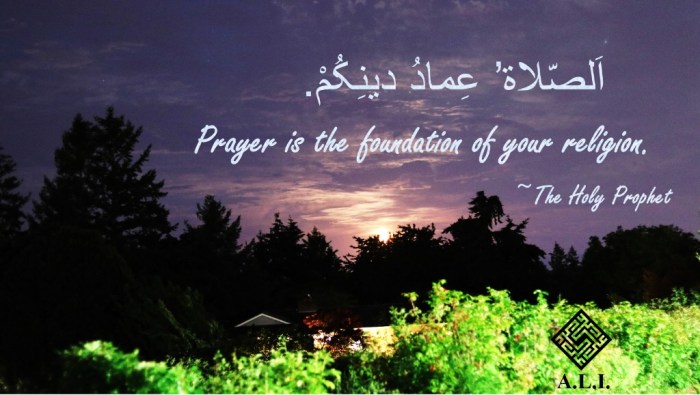
The true meaning of Salaat (the daily prayer)
Salaat is a demonstration of ‘politeness’ in the presence of God, while worshiping Him. We have other forms of worship that do not involve the specific rituals of salaat, such as uttering zikr (recitations in praise of Allah) or reciting dua (suplications). Salaat is this unique ‘politeness’ of the servant in front of the true Master. At any given time, one can recite the words of the salaat (prayer) verbatim, yet this is not recognized as salaat. Bowing (rukoo) and prostration (sujood) after recitation of the Qur’an are also forms of courtesy and ‘politeness’ in front of the Lord of the heavens and the earth.
Why should we perform salaat as is?
Many people believe in God and they also acknowledge that there should be a connection between the servant and the Master. However, when it comes to salaat they say “why should we perform and repeat the salaat as is, at fixed times every day, after performing ablution etc.? Why can’t we just remember God and recite zikr as we see fit, for example while resting”. As described above, the essence of the salaat ritual is demonstrating appropriate manners in the presence of God.
Naturally, “manners” are defined differently in each culture; what is deemed polite in one culture might be neutral or even rude in another. Therefore it is important to recognize, that God, and only God can define courteous manners in His presence and prescribe specific rituals to be performed for Him.
Love vs respect in salaat?
Any servant who wants to form a connection with God should remember the definition of ‘politeness’ as defined by God and align him/herself with this definition. Therefore as a servant you perform salaat at the times He has recommended in the way He has described. If salaat is viewed through this lens, then most questions that come to mind become self explanatory. Someone who views salaat purely as an expression of love towards the Master, may find him/her self wavering in this sacred ritual at times when they do not ‘feel’ the love. The rational element within the soul of man however, can consistently understand the importance of respect for the Lord, and this in itself can lead to perseverance in salaat and a deeper connection with the Almighty.
Essentially, acting in a humble, polite manner towards the Lord, in accordance with His prescriptions can be uplifting for the human spirit and will strengthen our love for Him. It is important to remember that this politeness and respect is a minimum yet essential prerequisite. The continual practice of salaat by the servant elevates him/her through the many levels of perfection that can be attained by the soul.
~Sheikh Alireza Panahiyan

The Ahlul Bayt (peace be upon them) have taught us numerous recommended actions to be performed before, during and after the formal prayer (salaat).
Some of the recommended acts to be performed before entering the prayer include:
1. Brush ones teeth, wear clean, nice clothes and put perfume.
2. Perform ablution (wudhoo) including rinsing the mouth and nose.
• use little water; avoid waste
• ask God to wash away your sins as you wash your face and hands.
• as you wipe your feet, ask God to help you walk on the right path.
3. Direct your focus to Allah, and this special meeting with Him.
• write down a to do list for yourself, so that you are not thinking about what needs to be done while in the prayer.
4. Recite the adhan and iqamah before each prayer.
5. Make your intention for the specific prayer, and recite “Allahu Akber” “God is the greatest” 7 times.
• with each “Allahu Akber” think you are pushing away everything related to this world (dunya) as you enter the prayer.
Lets challenge ourselves to implement these acts before entering into the prayer in order to make the most of this special meeting with our Lord.
Sayed Abazar Wahedi ( Mahdi )
Let’s think & reflect and make a wise decision .
Abazar Wahedi ( Mahdi ) .

May Allah ( SWT ) protect you us all from all evil inshallah .

