
🌹❤️🌹
Category: Uncategorized
Impact، Closeness، Affectionمحبت، قربت، تأثیرگذاری،
یکی از بهترین راهها برای افزایش محبت و دوستی میان مؤمنان، سفرهای دستهجمعی و بهویژه سفر به دل طبیعت است. وقتی در کنار تفریح و شادی، عبادت هم به صورت گروهی انجام شود، دلها به هم نزدیکتر میشود و محبتها بیشتر میگردد. مخصوصاً وقتی مردم، بهویژه جوانان، ما طلبهها و روحانیون را در زمین فوتبال، استخر یا در حال تفریح و بازی ببینند، احساس میکنند ما هم از جنس خودشان هستیم و از دل مردم برخاستهایم. این نزدیکی باعث میشود سخنان ما تأثیر بیشتری بر دلها بگذارد. این رفتار را در سیره پیامبران و امامان معصوم (علیهمالسلام) و بسیاری از علما و بزرگان نیز میبینیم؛ که با مردم بودند و در کنارشان زندگی میکردند.
One of the best ways to strengthen love and friendship among believers is through group trips, especially to nature. When collective worship is combined with moments of recreation and joy, hearts draw closer, and affection grows. Particularly when people, especially the youth, see us scholars and clerics on the football field, in the swimming pool, or enjoying leisure time, they feel a greater sense of closeness, realizing that we, too, are just like them, born from among the people. This proximity naturally increases the impact of our words. We observe this approach in the lives of the Prophets, the Infallible Imams (peace be upon them), and many great scholars, who lived among the people and shared their lives.


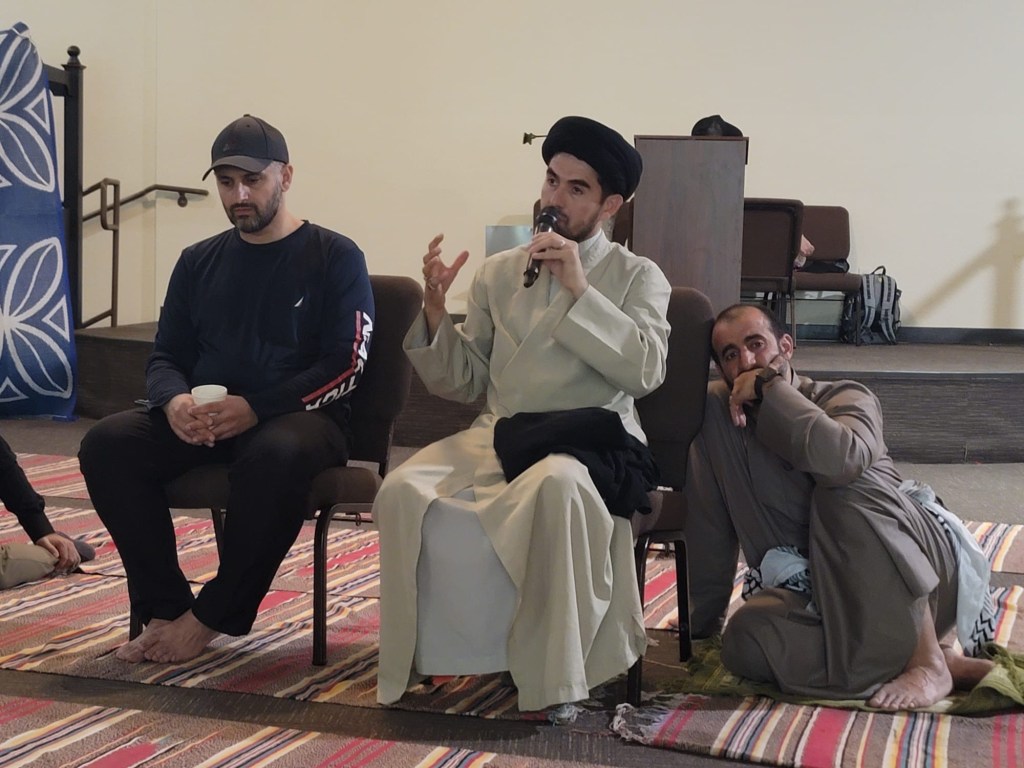


وداع تلخ
How difficult and painful it is to bid farewell. Especially when you are parting with the greatest of humanity. We traveled thousands of miles to kiss the sacred thresholds of Imam Musa ibn Ja’far (peace be upon him) and Imam Muhammad ibn Ali al-Jawad (peace be upon him). Is it possible to once again come to the embrace of love? The family of generosity, benevolence, and grace will surely look upon a poor and helpless soul like mine. As long as we do not distance ourselves from this noble family, they will never abandon us. The moment we let go of their hands, that very moment will be our downfall.
“Illuminating Truth in the Face of Conformity: A Stand Against the Shadows of Tradition”
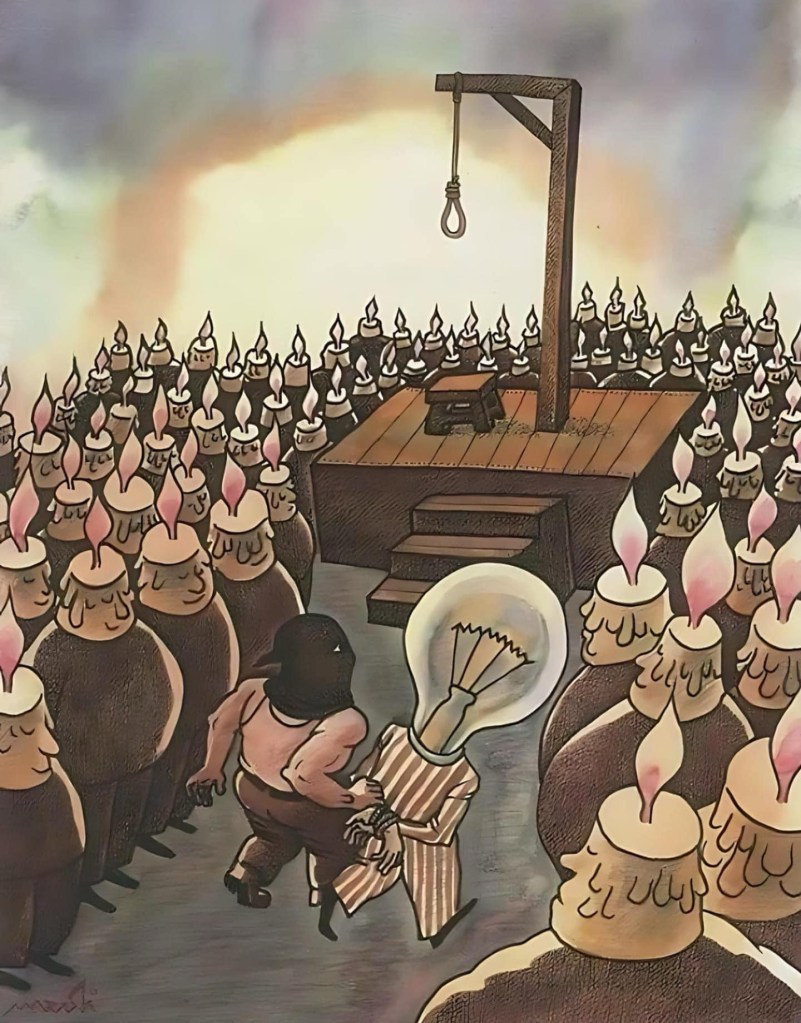
This image symbolically portrays the isolation of an individual with a new idea or a different way of thinking. While the crowd represents traditional and prevailing thoughts, the person depicted as a lightbulb symbolizes innovation and new ideas that face opposition and suppression. The image prompts us to consider how new ideas and different perspectives are often met with intense resistance and how these ideas may even be sacrificed in a society that resists change.
The teachings of the Qur’an and the Ahl al-Bayt (the family of the Prophet) strongly emphasize the importance of reflection and reasoning, even in the face of opposition. A relevant historical example is the story of Prophet Ibrahim (Abraham); peace be upon him. Living in a society of idol worshippers, he called for monotheism and faced severe resistance. Yet, he stood firm in his faith and persistence, and eventually, his truth was acknowledged.
**Inspiring Message:**
“Always walk the path of truth and righteousness, even if the entire world stands against you. Any idea rooted in the light of knowledge and truth will one day illuminate the world, even if initially it is ignored in the darkness.”
**From the Qur’an:**
“وَإِذَا قِيلَ لَهُمُ اتَّبِعُوا مَا أَنزَلَ اللَّهُ قَالُوا بَلْ نَتَّبِعُ مَا أَلْفَيْنَا عَلَيْهِ آبَاءَنَا أَوَلَوْ كَانَ آبَاؤُهُمْ لَا يَعْقِلُونَ شَيْئًا وَلَا يَهْتَدُونَ”
(بقره: 170)
“And when it is said to them, ‘Follow what Allah has revealed,’ they say, ‘Rather, we will follow what we found our fathers doing.’ Even though their fathers understood nothing, nor were they guided?”
(Surah Al-Baqarah: 170)
**A saying of Imam Ali (peace be upon him):**
“Many who were left alone because of their truthfulness will one day see that the same truth attracts everyone to itself.”
This image reminds us that pursuing truth and justice may involve significant opposition and challenges. Still, with faith and perseverance, we can overcome these obstacles and bring the light of truth to others.
*The Relevance of the Ashura Tragedy and Imam Hussein’s Uprising*
The image symbolically represents a struggle where truth and righteousness stand against oppression and tyranny. One of the most significant and enduring examples of this struggle is the uprising of Imam Hussein (peace be upon him) on the day of Ashura. This event is not only a historical occurrence but a lasting lesson for all generations—a lesson in standing firm against injustice, even at the cost of one’s life.
**Lessons from Ashura about the Image:**
1. **The Conflict Between Truth and Falsehood:**
On the day of Ashura, Imam Hussein (peace be upon him) and his loyal companions became symbols of truth and righteousness, while Yazid and his army represented falsehood and oppression. Just as in the image, where the lightbulb (symbolizing innovation and truth) stands among candles (symbolizing old and entrenched thoughts), Imam Hussein (peace be upon him) ignited the light of truth with his uprising despite facing severe resistance.
2. **Loneliness on the Path of Truth:**
Imam Hussein (peace be upon him) stood in the field of Karbala with a very small number of companions against a massive army. This image also depicts the solitude of an individual standing with a new and different belief among a crowd. But this loneliness in the way of truth and righteousness is valuable and can lead to a great revolution.
3. **Resistance Against Oppression:**
Despite knowing the consequences of his uprising, Imam Hussein (peace be upon him) did not retreat from his righteous stance. This resistance against tyranny and oppression teaches us that we must stand firm against injustice, even if it costs us our lives.
4. **The Light of Truth:**
Ashura has remained a beacon of guidance for all generations. Just as the lightbulb in the image shines brightly, the light of truth from Imam Hussein’s (peace be upon him) uprising continues to shine through history, inspiring those who choose to walk the path of truth and righteousness.
**Inspiring Message:**
“Just as Imam Hussein (peace be upon him) lit the beacon of guidance on the day of Ashura and stood against oppression, we too must rise and stand with the truth whenever and wherever we see injustice. Even if we stand alone, even if the world stands against us, the light of truth will ultimately prevail.”
**From the Qur’an:**
“قُلْ يَا أَيُّهَا الْكَافِرُونَ * لَا أَعْبُدُ مَا تَعْبُدُونَ * وَلَا أَنتُمْ عَابِدُونَ مَا أَعْبُدُ * وَلَا أَنَا عَابِدٌ مَّا عَبَدتُّمْ * وَلَا أَنتُمْ عَابِدُونَ مَا أَعْبُدُ * لَكُمْ دِينُكُمْ وَلِيَ دِينِ”
(کافرون: 1-6)
“Say, ‘O disbelievers! I do not worship what you worship, nor do you worship what I worship. For you is your religion, and for me is my religion.'”
(Surah Al-Kafirun: 1-6)
**A saying of Imam Hussein (peace be upon him):**
“If you have no religion and do not fear the Hereafter, then at least be free in this world.”
The Ashura uprising reminds us that we must always stand for truth and justice, even if the world is against us. The light of truth will always shine, even if, at first, it seems alone and unsupported. Imam Hussein’s (peace be upon him) uprising is not just a historical event but a symbol of resistance against oppression and injustice. This symbol continues to live on in the hearts and minds of people to this day.
Sayed Abazar Wahedi.
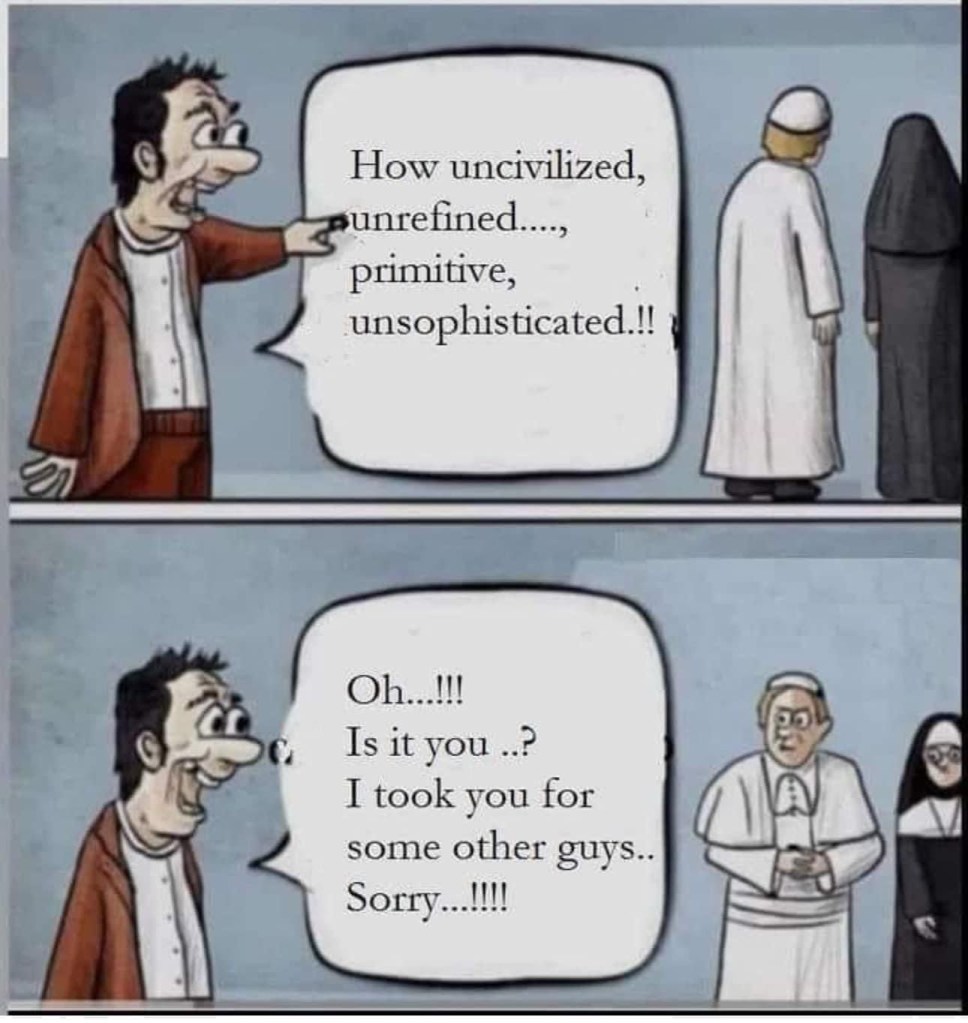
This image satirically illustrates the double standards in how people often judge others based solely on appearance. Initially, the man criticizes a group, which includes a Hijabi Muslim lady, labeling them as “uncivilized,” “primitive,” and “unsophisticated.” However, the next moment, when he realizes that one of the people he is criticizing is a nun—a figure who typically commands a great deal of respect—he immediately retracts his harsh words and apologizes. The cartoon underscores how a Hijabi Muslim woman is often misjudged and subjected to unfair stereotypes while a nun, wearing a similar form of modest dress, is afforded respect. It’s a powerful reminder of how bias and prejudice can distort our perceptions, leading to unequal treatment of people based on their appearance rather than their true character.
دکانداری در شهر تبریز ، ایران
در زیر سنگ ترازو، خریطه کاغذی را نیز میگذارد.
ازش پرسیدند، چرا؟
گفت، من چای میفروشم، خریطه کاغذی نه.
ایمان | #صداقت
A Shopkeeper in Tabriz, Iran
Under the weighing stone, he also places a paper bag.
They asked him, “Why?”
He replied, “I sell tea, not paper bags.”
#Faith | #Honesty

x.com/abazarsayed313/status/1791541227156115696
یادکردن نام قهرمانان و شهدای کربلا در تحصن به مناسبت اعتراض به جنایات رژیم کودک کش * إ س ر ا ئ ی ل *دانشجویان دانشگاه ایالتی سن حوزه که در قلب تکنولوژی جهان ( سلیکان ولی، شمال کالیفرنیا) بسیار پر معناست. قم و مشهد و کربلا و نجف نیست، قلب کالیفرنیاست. به راستی که راه قدس از کربلا میگذرد. ان شاءالله به زودی میریم به زیارت مسجد الأقصی در کشور مستقل و قدرتمند فلسطین عزیز. Remembering the names of the heroes and martyrs of Karbala during the encampment against the crimes of the child-killing regime * S R..AE. L * students of San Jose State University, which is in the heart of the world’s technology (Silicon Valley, Northern California) is significant. It is not Qom, Mashhad, Karbala, or Najaf; it is the heart of California. Indeed, the QUDS road passes through KARBALA. Inshallah, we will soon visit the Al-Aqsa Mosque in Palestine’s independent and powerful country.🇵🇸🇵🇸🇵🇸🇵🇸🇵🇸
 Sayed Abazar Wahedi